

 English
 中文简体
中文简体 عربى
عربىWater movement is a quiet force in aquaculture systems. In ponds, it is often not visible at first glance. The surface may look still, but beneath it, layers of water can behave differently. Some areas may hold more oxygen. Others may become stagnant over time. This uneven condition affects the overall environment.
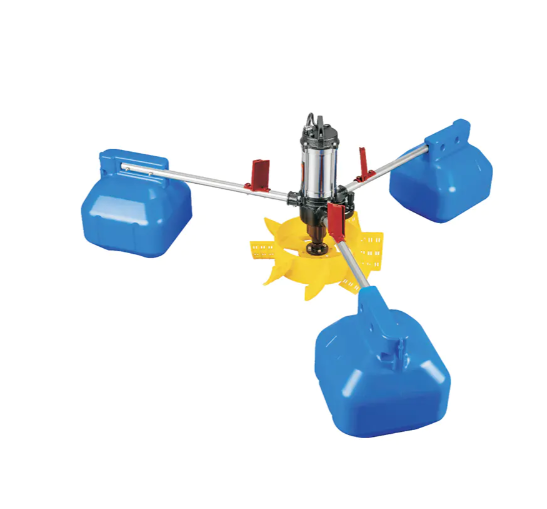
Aquaculture Machine Aerator is designed to address this imbalance. Their role is not only to add oxygen but also to support continuous water movement. This circulation helps keep the pond environment more uniform and stable.
Why Does Water Circulation Matter in Pond Systems?
Ponds are enclosed environments. Unlike rivers or open water systems, natural flow is limited. Without movement, water tends to separate into layers.
Heavier particles may settle at the bottom. Lighter elements remain near the surface. Temperature and oxygen levels can also vary between layers.
This separation affects water quality over time. Some areas may support healthy aquatic life. Others may become less active or less balanced.
Water circulation helps reduce this separation. It keeps different layers interacting in a more consistent way.
How Do Aerators Create Movement in Still Water?
Aerators introduce energy into the water. This energy becomes motion. The movement spreads outward from the point of activity.
As water is disturbed, it begins to shift position. Surface water moves downward. Deeper water rises upward. This vertical exchange helps mix the pond more evenly.
Horizontal movement also appears. Water flows outward across the surface and then returns in different paths. These patterns create a slow, continuous cycle.
The result is not chaotic movement. It is steady circulation that gradually influences the entire pond.
What Happens to Oxygen Distribution During Circulation?
Oxygen is not naturally equal across all pond areas. Some zones receive more exposure to air. Others remain isolated.
When water is still, oxygen transfer is limited. Movement allows air and water to interact more frequently.
Aerators help by breaking surface tension and creating contact points between air and water. As circulation increases, oxygen spreads more evenly through different layers.
This reduces sharp differences in oxygen levels across the pond. Aquatic life can then access more balanced conditions.
How Does Circulation Affect Temperature Balance?
Temperature in ponds often varies between surface and deeper layers. Sunlight warms the upper layer more quickly. Lower areas remain cooler.
Without movement, these differences can remain stable for long periods. This creates separate thermal zones.
Aerator-driven circulation helps reduce these differences. Warm water and cooler water gradually mix.
This mixing does not eliminate natural variation, but it reduces extreme separation. The pond environment becomes more stable in its temperature distribution.
What Role Does Circulation Play in Waste Movement?
Organic matter naturally enters pond systems. This can come from feed residue, natural plant material, or other biological sources.
Without movement, heavier particles tend to settle at the bottom. Over time, this can create uneven accumulation.
Circulation helps redistribute some of this material. Instead of remaining in one area, particles move with water flow.
This movement does not remove waste directly. It changes how waste is distributed, making the pond environment more active and less layered.
How Do Aerators Influence Water Layer Interaction?
Pond water often forms layers based on temperature, density, and movement. These layers may not mix easily without external influence.
Aerators help connect these layers. Vertical movement brings deeper water upward and surface water downward.
This interaction reduces separation between layers. The pond becomes more connected as a whole system.
Instead of isolated zones, the water behaves more like a continuous medium.
What Is the Relationship Between Circulation and Aquatic Activity?
Aquatic organisms respond to their environment. Movement, oxygen availability, and water quality all influence behavior.
When circulation improves, conditions become more balanced across the pond. This allows aquatic life to move more freely between areas.
Zones that were previously less active may become more usable. This spreads activity more evenly.
The relationship is indirect but important. Water movement supports environmental stability, which supports natural behavior patterns.
How Do Different Pond Areas Respond to Circulation?
Not all parts of a pond respond in the same way. Shape, depth, and layout influence water movement patterns.
Some areas may receive stronger flow. Others may experience slower movement. Over time, circulation spreads across the full system.
Below is a simple overview of how circulation interacts with pond zones:
| Pond Area | Water Condition Without Circulation | Effect of Aerator Activity |
|---|---|---|
| Surface zone | Variable exposure to air | More uniform interaction |
| Middle layer | Moderate stability | Increased movement exchange |
| Bottom zone | Low movement, accumulation risk | Gradual upward flow influence |
| Edge zones | Limited circulation | Improved water exchange |
This pattern shows how circulation connects different parts of the pond gradually rather than instantly.
How Does Continuous Movement Improve Water Stability?
Stability in pond systems does not mean stillness. It refers to balance across different conditions.
Aerator-driven circulation supports this balance. Instead of allowing isolated conditions to develop, it keeps water in motion.
This movement helps prevent extreme differences between areas. Conditions become more consistent across the pond.
Even slow movement is enough to influence long-term stability.
What Factors Influence Circulation Effectiveness?
Circulation depends on several environmental conditions. Pond size, shape, and depth all play a role.
Water density and natural movement patterns also influence how circulation spreads.
Placement of aeration points affects how movement develops. Different locations create different flow patterns.
Even environmental changes, such as wind or temperature shifts, can interact with circulation behavior.
The system responds continuously rather than following a fixed pattern.
How Does Circulation Support Long-Term Pond Environment Balance?
Over time, ponds naturally change. Layers form, materials settle, and oxygen levels vary.Circulation helps slow down extreme separation. It keeps water conditions more connected.This does not remove natural variation. Instead, it reduces sharp differences between zones.The pond becomes more adaptable to change. Water quality, oxygen distribution, and movement patterns remain more aligned across the system.Aerators play a quiet but continuous role in maintaining this balance through steady water circulation.