

 English
 中文简体
 عربى
Walk around a fish farm and you may notice that not every pond uses the same type of aerator. Some farms use impeller type aerator, while others rely on paddle wheel machines. At first glance, both seem to do a similar job. They move water, create contact between water and air, and help manage dissolved oxygen.
So why would a farmer choose one over the other?
The answer is not as simple as comparing two machines in a product catalogue. Pond shape, stocking density, water movement, operating costs, and maintenance all influence the decision. A machine that works well in one farming setup may not suit another.
For fish farmers planning a new pond, replacing old machinery, or comparing quotations from aquaculture equipment manufacturers, understanding these differences can make the purchasing process much easier.
1. Two Aerators, Two Different Ways of Moving Water
Both designs support oxygen transfer, but they create water movement differently. This affects how they fit into an aquaculture operation.
What Happens When an Impeller Type Aerator Runs?
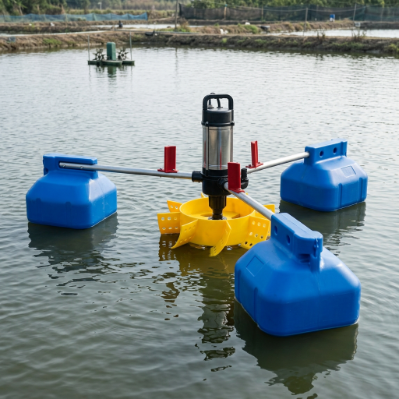
An impeller type aerator uses a rotating impeller to agitate water and encourage contact between water and air. Its actual water movement depends on the impeller design, installation position, and operating conditions.
For a fish farm, the important question is not simply whether the impeller rotates or creates visible splashing. It is how the machine works within the pond.
For example, a farmer dealing with uneven water movement may need to look at the direction of flow and the location of the aerator. Changing the equipment position may be worth evaluating alongside the choice of machine itself.
Impeller design also matters when comparing products from different manufacturers. Similar product names do not necessarily mean that the machines have identical structures or operating characteristics.
How Does a Paddle Wheel Aerator Move Water?
A paddle wheel aerator uses rotating paddles that strike the water surface. The paddles produce splashing and generate a current around the machine.
This movement is one reason paddle wheel aerators are widely associated with pond-based fish and shrimp farming. Depending on the installation, their surface current can help move water through a designated area.
However, the current does not automatically reach every part of a pond. Corners, irregular boundaries, obstacles, and equipment placement can all affect circulation.
That is why looking at the whole pond is more useful than judging an aerator by the amount of splashing visible around it.
2. Impeller Type Aerator vs Paddle Wheel Aerator: What Is the Real Difference?
When comparing these machines, it helps to look beyond their appearance. The working components, water movement patterns, and installation arrangements can affect their suitability for different farms.
| Factor | Impeller Type Aerator | Paddle Wheel Aerator |
|---|---|---|
| Main working component | Rotating impeller | Rotating paddles |
| Water movement | Influenced by impeller geometry and installation | Generated by paddle action at the water surface |
| Aeration process | Water agitation and air-water contact | Surface splashing and water agitation |
| Pond layout | Suitability depends on the flow pattern created by the selected model | Suitability depends partly on the direction and reach of the paddle-driven current |
| Maintenance points | Impeller, drive system, fasteners, and motor | Paddles, drive system, floats, fasteners, and motor |
| Purchasing considerations | Impeller configuration, installation needs, and intended operating conditions | Paddle arrangement, installation stability, and intended circulation pattern |
Neither design automatically delivers a particular result in every pond. Actual oxygen transfer and circulation depend on the machine, water conditions, installation, and operating practices.
There is another detail worth remembering: the names used in product listings are not always enough to establish whether two machines are directly comparable. Buyers should check the actual design and intended application before making a decision.
3. Start With Your Pond, Not the Product Catalogue
Imagine two fish farms with ponds of similar size. One raises fish at a relatively low stocking density, while the other operates a more intensive production system. Their aeration requirements may be quite different, even if the ponds look similar from the outside.
This is where equipment selection becomes more than a simple product comparison.
Pond Shape Can Change the Decision
A long rectangular pond creates different circulation challenges from a pond with an irregular outline. Water may move easily through one area but remain relatively still near a corner or behind an obstruction.
In these situations, consider where an aerator will sit and what direction the water needs to move. A paddle wheel may be suitable when its current fits the intended circulation pattern. An impeller type aerator may be worth evaluating when the selected model's water movement better matches the layout.
The point is not to assume that one machine can solve every circulation problem. Sometimes the installation arrangement deserves as much attention as the aerator itself.
Before ordering, a simple pond sketch can help. Mark the water inlet, outlet, deeper sections, existing equipment, and areas where circulation appears weak. This gives the manufacturer a clearer picture of the application.
Stocking Density and Feeding Habits Matter
Oxygen demand changes with the way a farm operates. A pond containing more aquatic animals may require closer attention to dissolved oxygen, particularly when water temperature rises or feeding activity increases.
The species being raised also matters. Fish and shrimp have different environmental requirements, and those requirements can change throughout the production cycle.
Rather than selecting a machine based on pond area alone, consider the biomass, seasonal conditions, water exchange, and existing oxygen measurements. These details provide a more useful starting point for discussing equipment suitability.
An aerator is part of a wider pond management system. Water quality monitoring, feeding practices, and stocking decisions still play important roles.
4. What About Electricity Bills and Daily Maintenance?
The purchase price often receives plenty of attention during negotiations. Running costs may receive less attention until the machine has been operating for several months.
For a farm using several aerators, electricity can become a regular operating expense. Maintenance and replacement parts also need to be included in the budget.
Compare Operating Costs Before Comparing Prices
A lower quotation does not necessarily mean lower long-term costs. The machine's electrical consumption, operating schedule, maintenance needs, and expected service requirements all affect the overall expense.
A basic electricity estimate uses three figures:
Estimated electricity cost = Power consumption × Operating hours × Electricity rate
Use consistent units and the local electricity tariff when making the calculation. If the equipment operates under changing loads, measured consumption can provide a more realistic estimate than rated power alone.
When comparing an impeller type aerator with a paddle wheel model, check whether the proposed machines are expected to perform the same duty. A cost comparison is less useful when the operating requirements differ.
It is also worth asking about replacement components before placing an order. A small difference in the purchase price may matter less than the availability of parts when a machine needs attention during a busy production period.
Maintenance Is Easier When You Know What to Check
An aerator may run quietly for a long time, but that does not mean it should be left without inspection.
For an impeller type aerator, operators can check the impeller assembly, fasteners, drive components, and motor condition according to the manufacturer's instructions.
With a paddle wheel aerator, attention may be needed around the paddles, floats, transmission components, and mounting points.
Unusual vibration, unexpected noise, visible damage, or a change in normal operation deserves investigation. Debris and corrosion may also become concerns depending on the water environment.
Before carrying out repairs, isolate the electrical supply and follow the manufacturer's safety procedures. Maintenance should be performed by qualified personnel where required.
A practical maintenance record can be surprisingly useful. Recording inspection dates, replaced parts, and recurring faults helps farm operators identify patterns and plan servicing rather than waiting for an unexpected interruption.
5. Four Buying Mistakes That Are Easy to Overlook
Choosing an aerator is not difficult because there are too many product names. The challenge is making sure the selected machine fits the work it is expected to do.
Mistake 1: Choosing by Pond Area Alone
Pond area is a useful reference, but it does not explain oxygen demand by itself. Depth, stocking density, species, temperature, and water exchange also matter.
Give the manufacturer enough information to understand the farming conditions before asking for a recommendation.
Mistake 2: Judging Performance by Splashing
A machine that creates visible splashing may look active, but appearance alone cannot establish oxygen transfer efficiency.
Dissolved oxygen measurements and an understanding of water movement provide more meaningful information. The way an aerator performs should be assessed under relevant operating conditions rather than by appearance alone.
Mistake 3: Forgetting Installation Access
A machine may suit the pond in principle but create difficulties if operators cannot reach it safely for inspection or servicing.
Check the mounting position, electrical supply, cable protection, and access for maintenance. The installation should also account for the equipment's support and stability requirements.
Mistake 4: Comparing Quotations Without Checking the Details
Two suppliers may use similar descriptions while offering different configurations. Impeller design, paddle arrangement, materials, drive components, and protective features can vary.
Ask each supplier to identify the proposed model and provide the relevant technical documentation. Confirm what is included in the quotation, whether spare parts are available, and what installation guidance is provided.
These questions help make the comparison clearer and reduce the chance of misunderstandings after the order is confirmed.
6. Questions to Ask Before Ordering an Aerator
Before contacting a manufacturer, prepare a few details about the farm. You do not need a complicated engineering report to start a useful discussion.
- What species are being raised, and what is the approximate stocking density?
- What are the pond's dimensions, depth, and general shape?
- Is the main concern oxygen management, uneven circulation, or replacement of existing machinery?
- What electrical supply is available at the installation site?
- Will the equipment operate in freshwater, brackish water, or another environment?
- How often can the farm carry out routine inspections?
- Are replacement parts and technical support available when needed?
If you already have aerators in operation, share the model information and explain what is working well or causing difficulties. Details about existing equipment can help a supplier understand whether a replacement, a different configuration, or a change in placement deserves consideration.
For commercial buyers and importers, it is also sensible to confirm packaging, delivery arrangements, documentation, warranty terms, and spare parts availability before finalizing an order.
7. Finding an Aeration Solution That Fits Your Operation
There is no single answer to the impeller type aerator versus paddle wheel question. The choice comes down to how each machine's design fits the pond and the work required of it.
An impeller type aerator may suit a farm when the selected impeller configuration supports its intended water movement and operating needs. A paddle wheel aerator may be appropriate when paddle-driven circulation fits the pond arrangement.
For farms planning new installations or replacing existing machinery, discussing the application with an experienced aquaculture equipment manufacturer can help narrow down the options.
Taizhou Yuansheng Aquaculture Machinery Co., Ltd. supplies aquaculture aeration equipment, including impeller type aerators and other mechanical aeration solutions. When reviewing the company's product range, buyers can share details about their pond layout, farming conditions, and operating requirements to discuss suitable equipment configurations.
The aim is to choose machinery that makes sense for the farm's actual working conditions, with installation, maintenance, and operating costs considered alongside the initial purchase.
An impeller type aerator and a paddle wheel aerator may appear to serve the same purpose, but their differences in design and water movement can influence how they fit into a pond.
Before making a purchase, look at the way water moves through the farming area, the oxygen needs of the stock, the available electrical supply, and the practicalities of maintenance. Then compare specific machine configurations rather than relying on product names alone.
A well-informed decision starts with understanding the pond. Once those needs are clear, it becomes easier to have a useful conversation with a manufacturer and select equipment suited to the operation.