

 English
 中文简体
 عربى
When oxygen levels in a pond start to slip, many farmers blame the weather. Often the real cause sits on the water surface: a machine that no longer moves water and air the way it did when it was new.
How a Paddle-Style Pond Aerator Actually Works
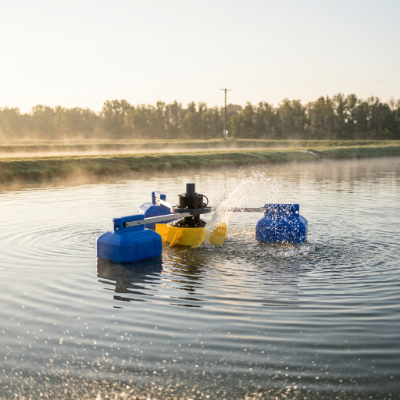
Before looking at problems, it helps to picture the basic job. A motor turns a shaft, and the shaft spins an impeller that sits partly under the water. The blades throw water into the air, draw fresh air in at the surface, and push water outward to create circulation.
Efficiency here means how much oxygen the machine adds for each unit of electricity it uses. Anything that disturbs the splash, the spin or the power supply lowers that ratio.
The Three Jobs the Machine Does
- Splashing: breaking water into droplets so more surface meets the air.
- Mixing: moving oxygen-rich surface water into deeper layers.
- Circulating: carrying water around the pond so dead zones do not form.
If one of these weakens, the whole pond feels it.
Mechanical Wear and Tear
Moving parts age. In wet, salty or muddy surroundings, they age faster than many owners expect.
Worn or Damaged Blades
Blades take a beating from debris, feed pellets, sand and constant water impact. Over time their edges round off, bend or crack. A blade that has lost its shape throws less water and wastes motor effort.
Look for:
- Chipped or bent edges
- Uneven wear between blades
- Cracks near the mounting points
- Visible loss of material
Bearing and Shaft Problems
Bearings keep the shaft turning smoothly. When grease dries out or water seeps in, friction rises. You may hear grinding, humming or a rhythmic knock. A shaft that wobbles even slightly causes vibration, and vibration shortens the life of nearly every other part.
Gearbox Trouble
Many units use a gearbox to set the speed between motor and blades. Low oil, dirty oil or worn gears all reduce power transfer. The motor may still run hard while the blades turn more slowly than they should.
Buildup, Fouling and Tangled Debris
A clean machine moves more water. A coated or tangled one struggles.
Algae, Slime and Mineral Crust
In warm ponds, algae and biofilm cling to blades, floats and the shaft housing. In hard or brackish water, mineral deposits form a rough crust. Extra weight and a rough surface both change how the blades cut through water.
Wrapped Plants, Line and Netting
Plant matter, fishing line, rope scraps and torn netting can wrap around the shaft or jam between blades. Even a small tangle creates drag and imbalance. In shallow ponds with heavy vegetation, this happens more often than many operators realize.
Electrical and Power Issues
A mechanical part may look fine while the real problem hides in the wiring or the supply.
Voltage Drop
If a unit sits far from the power source and the cable is too thin, voltage falls before it reaches the motor. A motor running on low voltage draws more current, runs hotter and turns with less force.
Motor Overheating
Heat is a quiet efficiency thief. Common causes include:
- Cooling fins covered in dust or mud
- Poor ventilation around the motor housing
- Damaged winding insulation
- Constant overload from tangled debris
An overheated motor may trip its protection switch, which leaves gaps in aeration without anyone noticing.
Loose or Corroded Connections
Moisture sneaks into terminals and junction boxes. Corrosion adds resistance, and resistance turns power into wasted heat. A quick look at the connections often reveals trouble that no amount of blade cleaning will solve.
Installation and Placement Mistakes
Sometimes the machine is healthy and the setup is the problem.
Wrong Immersion Depth
Blades sitting too deep push against heavy water and strain the motor. Blades sitting too high skip across the surface and throw very little water. Water levels change through the season, so a setting that worked in spring may be off by midsummer.
Float and Balance Issues
If floats take on water or sit unevenly, the machine tilts. A tilted unit throws water in one direction and loses its even splash pattern. Check that it rides level and steady.
Poor Positioning in the Pond
Overlapping flow patterns or untouched corners waste effort. Machines pushing against each other cancel part of their own work. Sensible spacing helps water travel in a smooth loop around the pond.
Water Conditions That Quietly Reduce Performance
The pond itself changes how well any aerator performs.
| Condition | How It Affects the Unit | What You May Notice |
|---|---|---|
| Warm water | Holds less dissolved oxygen | Fish gather at the surface at dawn despite aeration |
| High salinity | Speeds up corrosion and mineral buildup | Rust and white crust on parts |
| Heavy organic load | Oxygen is used up as fast as it is added | Cloudy water and a strong odor |
| Dense algae | Adds drag and coats moving parts | Green film on blades |
| Shallow depth | Limits mixing and stirs up sediment | Muddy water around the unit |
In short, a machine can run well and still seem weak if the pond demands more oxygen than the setup can supply. Stocking density, feeding rate and sludge buildup all raise that demand.
Warning Signs Worth Acting On
Early signals are easier to fix than late ones. Watch for these:
- Unusual noise, vibration or rattling
- A weaker splash than before
- A motor casing that feels very hot
- Higher electricity bills with no change in running hours
- Fish gathering near the surface or edges
- Frequent tripping of the protection switch
- Water that looks stagnant in certain corners
Keep a short log with dates, observations and repairs. Patterns show up quickly on paper, and they make troubleshooting much faster.
A Simple Maintenance Routine That Works
Good habits cost little. Here is a practical schedule you can adapt to your own farm.
Daily Checks
- Listen for strange sounds at start-up.
- Watch the splash pattern.
- Confirm the unit floats level.
Weekly Tasks
- Remove wrapped plants, line and debris.
- Wipe algae or slime from blades and floats.
- Inspect cables for cuts, kinks or exposed spots.
Monthly or Seasonal Tasks
- Check gearbox oil level and condition.
- Grease bearings as the maker recommends.
- Tighten bolts, clamps and mounting hardware.
- Test insulation and grounding with proper tools.
- Review blade condition and replace worn pieces.
- Clean the motor cooling surfaces.
Before and After the Season
Before heavy use, run a full inspection and a short test. After the season, drain, clean, dry and store the unit away from direct sun and rain. Rubber and plastic parts last longer when they are not left baking or soaking for months.
Matching the Machine to the Pond
A common hidden cause of poor performance is a mismatch between equipment and need. A small unit in a large, heavily stocked pond will always struggle. An oversized unit in a tiny pond may stir up bottom mud and waste power.
Consider these points when planning:
- Pond size and depth: shape affects how water moves.
- Stocking level: more animals mean more oxygen demand.
- Climate: warm seasons call for more support.
- Power access: stable electricity matters as much as the machine.
- Species needs: some fish and shrimp tolerate less variation than others.
Before buying or adding units, sketch your pond and mark where water tends to stay still. Then compare that sketch with the layouts and motor formats shown in a mechanical aerator for aquaculture catalog. Seeing the options next to your own pond map makes it easier to ask a supplier the right questions.
Quick Troubleshooting Guide
| Symptom | Possible Cause | Quick Action |
|---|---|---|
| Weak splash | Fouled or worn blades | Clean and inspect blades |
| Loud vibration | Bent shaft or loose parts | Stop the unit and check mounts |
| Hot motor | Overload or blocked cooling | Clear debris and check airflow |
| Frequent shutoff | Voltage drop or tangle | Test the supply and remove wraps |
| Tilted body | Damaged float | Repair or replace the float |
| High power use | Friction in bearings or gears | Check lubrication |
If a problem returns after a simple fix, a trained technician should look at the electrical and mechanical systems together.
Frequently Asked Questions
How often should blades be replaced?
There is no single schedule. It depends on water quality, debris and running hours. Inspect blades regularly and replace them when you see cracks, deep wear or clear loss of shape.
Can algae lower aeration performance?
Yes. A coating adds weight and roughness, which changes how the blades move through water. Regular cleaning prevents this.
Why does an aerator seem weaker in summer?
Warm water holds less oxygen and animals consume more of it. The machine may be working normally while the pond needs more support.
Is noise always a sign of damage?
Not always, but a new or growing noise deserves attention. It often points to bearings, loose bolts or tangled debris.
Key Takeaways
Efficiency loss rarely comes from one dramatic failure. It builds up through small issues: worn blades, dry bearings, algae, weak voltage, poor placement and changing pond demands. Each one is manageable when caught early.
To keep your impeller type aerator running steadily, focus on three habits: clean it often, inspect it on a schedule and match it to the real needs of your pond. If you are planning a new setup or replacing an aging unit, browsing a range of aquaculture aerator designs while you map your pond can save time later.