

 English
 中文简体
中文简体 عربى
عربىAquaculture runs on one thing above all else: a water environment that stays within workable limits. Fish, shrimp, and other aquatic animals spend their entire lives in the same body of water — eating, growing, breeding, all of it happening in one shared space. So when that water shifts even slightly, the ripple effects touch the whole operation.
Of all the variables farmers track, dissolved oxygen probably deserves the most attention. Aquatic animals pull oxygen straight from the water to breathe — there's no alternative source. But they're not the only ones drawing from that same pool. Microorganisms consume oxygen too, and organic matter eats into the supply as it decomposes. The water is essentially running an oxygen deficit constantly, just at varying rates.
Nature does pitch in, to be fair. Algae and plants generate oxygen through photosynthesis, and the atmosphere feeds oxygen in at the surface layer. The problem is timing — natural supply doesn't reliably sync up with what the system actually needs moment to moment. Weather swings, water movement, feeding schedules, stocking density, biological load — all of it pushes and pulls on that balance.
That gap is exactly where an aeration system earns its place. Aeration pumps oxygen into the water and, just as importantly, keeps that water moving. For most serious aquaculture operations, it's stopped being an optional add-on a long time ago — it's baked into daily water management.
What Role Does Oxygen Play in Aquaculture?
Oxygen underpins nearly every biological process happening in an aquaculture system. Fish and shrimp pull it from the water with every breath, and when supply is solid, they behave the way you'd want — swimming normally, feeding well, growing on schedule.
But cultured animals aren't drawing on this pool alone. Microorganisms in the water burn through oxygen too, and so does organic material breaking down in the sediment and water column. Oxygen is essentially in constant motion — entering, getting consumed, entering again.
The balance also swings across a single day. Sunlight triggers photosynthesis, which pumps oxygen into the water during daylight hours. Once darkness falls, that production shuts off entirely — but respiration doesn't pause for anyone. Oxygen levels can drop noticeably overnight as a result.
This daily swing is exactly why farm managers can't just trust nature to handle things on its own. FAO guidance flags dissolved oxygen as a critical water-quality factor precisely because so many organisms in the culture environment depend on it directly.
Aeration offers a workaround. Rather than waiting on natural processes to catch up, an aeration system can force more air-water contact or actively push oxygen-rich water through the culture area.
| Oxygen-related factor Influence on aquaculture | |
|---|---|
| Fish and shrimp respiration | Uses oxygen from the water |
| Microbial activity | Consumes oxygen during biological processes |
| Organic matter | Can increase oxygen demand as it breaks down |
| Photosynthesis | Adds oxygen during periods of light |
| Water movement | Helps distribute oxygen through the culture area |
| Aeration | Helps add oxygen and improve water circulation |
Why Can Natural Oxygen Supply Become Insufficient?
A pond may look healthy on the surface while conditions below the surface are changing. Oxygen does not always spread evenly through the entire water body. Water movement, biological activity, temperature, and the condition of the pond can influence how oxygen is distributed.
Photosynthesis is an important natural source of oxygen in many ponds. Yet it depends on light. When sunlight is limited, oxygen production can fall. At night, photosynthesis stops, while fish, plants, microorganisms, and other organisms continue to consume oxygen.
Weather can also influence the situation. Changes in sunlight and water conditions may alter the natural oxygen balance. Heavy biological activity can place additional demand on the available oxygen.
The amount of cultured biomass matters as well. As more animals occupy the same culture environment, their combined oxygen demand becomes more important. Feeding can also increase biological activity because uneaten feed and waste may contribute to oxygen consumption.
USDA guidance describes dissolved oxygen as a major water-quality concern in aquaculture ponds and notes that conditions such as stocking levels, weather, and seasonal changes can create a need for mechanical aeration.
This does not mean that natural processes are unimportant. They remain part of the oxygen cycle. The issue is that natural supply can fluctuate, while the needs of the culture system continue.
Aeration gives farmers a practical way to respond to this changing balance.
How Does Aeration Help Maintain Dissolved Oxygen?
Aeration works by improving the contact between air and water. Depending on the type of system, this can happen through water movement at the surface or by introducing air into the water.
When water is agitated, more of it comes into contact with the atmosphere. This creates opportunities for oxygen to move from the air into the water. Air-based systems use another approach by sending air into the water, where oxygen can enter the surrounding water.
The process is more than simply adding bubbles. Water movement is also important. Aeration can help move water through different areas of a pond or tank, reducing stagnant zones and helping distribute oxygen more evenly.
FAO describes two broad approaches to aquaculture aeration: systems that use water movement to encourage oxygen uptake from the atmosphere and systems that introduce air into the water.
The practical value of aeration therefore comes from two related actions:
- Adding oxygen to the water.
Aeration encourages oxygen transfer between air and water. - Moving water through the culture environment.
Circulation helps spread available oxygen rather than allowing it to remain concentrated in one area.
These functions can work together. A system that only moves water without improving oxygen exchange may not address the entire problem. Likewise, oxygen introduced into one area may have limited value if it does not reach other parts of the culture environment.
Good aeration management considers both oxygen supply and water movement.
How Does Aeration Support Fish and Shrimp Health?
Aquatic animals need their water environment to sit within a fairly narrow comfort zone, and oxygen is a huge piece of that. When supply drops, behavior changes fast — animals slow down, activity drops off. Push that shortage further and you're looking at real stress on the whole population.
Fish will actively relocate toward oxygen-rich zones when given the option. Shrimp react to shifting conditions in their own way too. These behavioral cues are basically an early warning system — a sign the water balance has already started slipping before numbers on a meter confirm it.
Keeping oxygen levels where they should be creates a more stable environment overall, which supports normal feeding and takes pressure off animals already dealing with less-than-ideal water conditions.
The link between oxygen and feeding deserves particular attention. Metabolism runs on oxygen, and feeding plus digestion both add to that same demand. When the environment can't keep pace, feeding management gets noticeably harder to pull off well.
FAO materials note that low dissolved oxygen directly affects feeding behavior and feed efficiency in pond systems, and that aeration becomes especially valuable once oxygen turns into the limiting factor in fed aquaculture setups.
That puts aeration squarely inside animal management, not off to the side as some isolated water-treatment task.
Farmers who track feeding behavior, movement patterns, and water conditions together tend to make sharper, faster calls on when aeration needs adjusting.
Can Aeration Improve Water Circulation?
Oxygen is not always evenly distributed throughout a pond or tank. Some areas may receive more oxygen from the atmosphere, while other areas may have less movement.
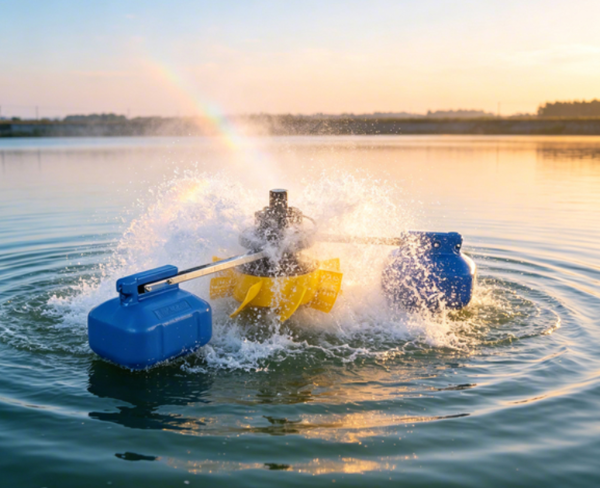
Aeration can help reduce this uneven distribution. Surface aerators move water and expose it to the atmosphere. Air-diffusion systems create rising air movement that can carry surrounding water upward. Both approaches can contribute to circulation.
This movement can be especially useful in larger culture areas. Water near the surface may have different conditions from water closer to the bottom. Moving water can help connect these areas and distribute oxygen more widely.
Circulation also has another benefit. It can reduce stagnant areas where waste and organic matter may accumulate. This does not mean that aeration replaces proper pond management or water treatment. Instead, it becomes one part of a wider approach to maintaining water quality.
The relationship between aeration and circulation is important because adding oxygen to one location is not always enough. The oxygen needs to become useful throughout the culture environment.
| Aeration function Effect on the culture environment | |
|---|---|
| Air-water contact | Encourages oxygen to enter the water |
| Surface movement | Helps exchange gases at the water surface |
| Water circulation | Helps distribute oxygen |
| Vertical movement | Connects different water areas |
| Mixing | Reduces areas with limited water movement |
| Continuous management | Helps respond to changing oxygen demand |
What Types of Aquaculture Systems Can Use Aeration?
Aeration is not limited to one type of aquaculture operation. Its form and application can change according to the culture environment.
Outdoor ponds are one common setting. In these systems, aeration can help manage oxygen levels when natural supply does not meet demand. Surface movement can also improve circulation across the pond.
Indoor tanks can require a different approach. The water environment is more controlled, but oxygen still needs to reach the cultured animals. Air-based systems can introduce air into the water while helping create movement.
Aeration can also be relevant to shrimp farming. Shrimp ponds can experience changing oxygen demand as biological activity changes. Aeration can help maintain a more suitable environment for the animals and support water circulation.
Recirculating systems present another situation. Water is continuously moved through different parts of the production system. Aeration can work alongside other water-management processes to maintain suitable conditions.
The specific system should match the culture environment. A solution designed for an outdoor pond may not be appropriate for an indoor tank. The shape of the culture area, water depth, animal type, stocking conditions, and existing circulation pattern can all influence the choice.
FAO identifies both hydraulic and air-diffusion approaches for aquaculture aeration, showing that different culture environments can use different ways to improve oxygen transfer and water movement.
How Should Aquaculture Farms Think About Aeration Management?
Choosing an aerator is only part of the process. How the equipment is used can be just as important.
A farm needs to understand when oxygen demand is likely to change. Feeding periods, changes in weather, water conditions, and biological activity can all influence the oxygen balance. Aeration should therefore be considered alongside daily farm observations.
Water movement also deserves attention. If an aerator operates in a way that leaves parts of the culture area poorly circulated, the system may not provide the desired result. Equipment location and water movement should work together.
Regular observation can help identify changes. Farmers can look at animal behavior, water appearance, feeding response, and other signs of changing conditions. Dissolved oxygen monitoring can provide another source of information when appropriate.
Maintenance is also part of aeration management. An aerator that is dirty, damaged, or poorly maintained may not move air or water as intended. Routine inspection helps keep the system ready when oxygen demand changes.
A practical aeration plan can therefore include:
- Checking the condition of aeration equipment.
- Observing changes in animal behavior.
- Watching feeding activity and water conditions.
- Considering weather and changes in the culture environment.
- Checking whether water movement reaches the intended areas.
- Keeping aeration equipment clean and operational.
- Adjusting aeration practices when production conditions change.
The goal is not simply to operate equipment continuously without considering the surrounding environment. The goal is to manage oxygen and circulation in a way that matches the needs of the culture system.
Why Is Aeration Becoming a Key Part of Modern Aquaculture Management?
Aquaculture is becoming increasingly focused on controlled production environments. Farmers need to manage water, feed, animal health, and production conditions as connected parts of one system.
Oxygen sits at the center of many of these relationships. It affects respiration. It interacts with biological activity. It influences how organic matter breaks down. It also affects the way animals respond to their surroundings.
As production systems become more carefully managed, natural oxygen supply alone may not always provide enough control. Aeration gives farmers another management tool.
The value of aeration also extends beyond emergency situations. In some culture systems, it can be used as part of routine water management. This approach shifts aeration from a response to an oxygen problem toward a planned part of daily production.
Modern aquaculture also includes a wide range of environments. There are ponds, tanks, indoor facilities, outdoor systems, shrimp farms, fish farms, and recirculating operations. Each has different water-management needs.
For that reason, the question is no longer simply whether aeration is useful. The more practical question is how aeration should fit into a particular culture system.
An appropriate aeration strategy considers the animals, the water environment, the production method, and the natural changes that occur during operation. When these factors are considered together, aeration becomes part of a broader effort to keep the culture environment stable and responsive to changing conditions.