

 English
 中文简体
中文简体 عربى
عربىSolar panel aerators have seen significant development in recent years, offering versatile designs that support sustainable agriculture and water management in remote locations. Modern models prioritize energy efficiency, adaptability, and consistent performance across various water bodies.
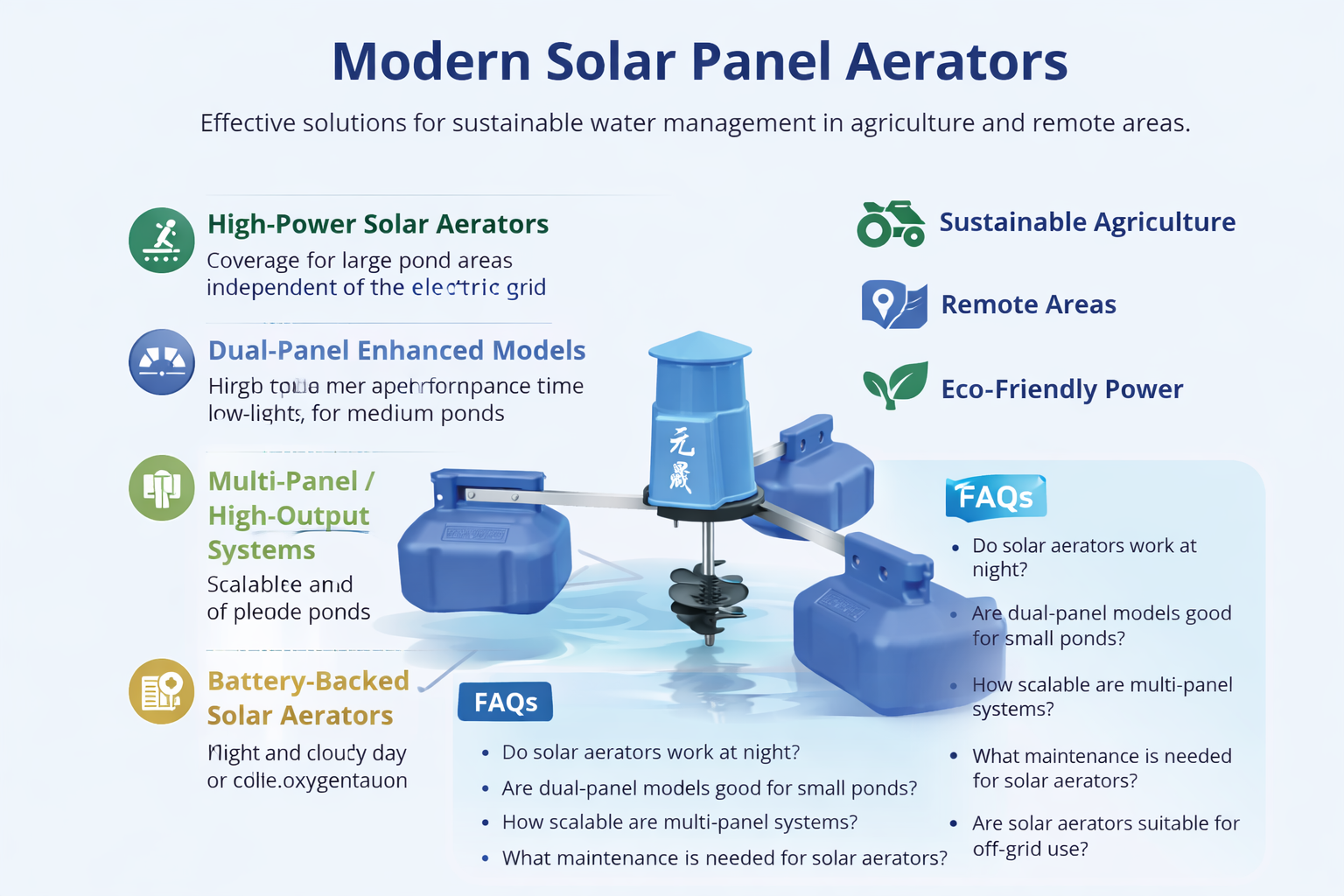
Types and Features of Modern Solar Panel Aerators
High-Power Solar Aerators:
- Designed for large water surfaces, capable of maintaining oxygen levels across ponds or reservoirs up to several acres.
- Equipped with durable solar panels and high-efficiency motors to ensure consistent aeration throughout daylight hours.
- Operates independently of the electricity grid, making it suitable for rural farms or areas without reliable power access.
- Can function effectively in moderate sunlight, allowing continuous oxygenation in varying weather conditions.
- Ideal for fish farms, aquaculture, and large ornamental ponds where maintaining water quality is crucial.
Dual-Panel Enhanced Performance Models:
- Incorporates two solar panels to maximize energy capture even in low-light or shaded conditions.
- Provides higher motor output without increasing device size, allowing more powerful aeration in compact systems.
- Suitable for medium-sized ponds, backyard water features, or aquaculture tanks.
- Requires minimal maintenance and is flexible enough to adjust to seasonal changes in sunlight exposure.
- Reduces risk of oxygen level fluctuations in small to mid-sized water bodies, supporting healthier aquatic ecosystems.
Multi-Panel or High-Output Systems:
- Combines multiple solar panels to generate higher power output for large water bodies or multi-pond installations.
- Scalable design allows adding additional panels to expand aeration coverage as needed.
- Frequently used in community ponds, fish farms, and small reservoirs.
- Reduces dependency on high-voltage wiring or external energy sources, providing a practical off-grid solution.
- Often integrated with automated monitoring systems to track performance and optimize aeration efficiency.
Battery-Backed Solar Aerators:
- Stores excess energy generated during daylight hours, enabling operation after sunset or during cloudy periods.
- Provides consistent aeration to maintain water quality even when sunlight is insufficient.
- Suitable for remote ponds, aquaculture farms, and areas where continuous circulation is necessary for aquatic life.
- Reduces fluctuations in oxygen levels and helps prevent stagnation, supporting long-term ecosystem health.
- Battery management and maintenance are straightforward, ensuring reliable performance without frequent intervention.
Applications and Advantages
Modern solar panel aerators are increasingly applied beyond agriculture. Their designs support sustainable water management in off-grid locations, including remote reservoirs, garden ponds, and aquaculture facilities. Proper installation, including correct panel orientation and placement, is essential for optimal performance.
Frequently Asked Questions
Q1: Can solar aerators operate at night?
A1: Battery-backed models store energy during the day, allowing them to provide aeration at night or during cloudy weather.
Q2: Are dual-panel aerators suitable for small ponds?
A2: Yes, dual-panel systems are effective in small to medium ponds, providing stable oxygen levels with low maintenance.
Q3: How scalable are multi-panel aerators?
A3: Multi-panel systems can be expanded by adding extra panels, making them suitable for larger water bodies or multiple ponds.
Q4: What maintenance is required for solar aerators?
A4: Regular cleaning of solar panels and inspection of motor units are typically sufficient to maintain long-term performance.
Q5: Are solar aerators practical in remote areas?
A5: Yes, solar aerators are designed for off-grid use, supporting aquaculture and pond management where electricity is unavailable.
Overall, modern solar panel aerator models provide practical and versatile solutions for water aeration. Their designs—from high-power units and dual-panel systems to multi-panel configurations and battery-backed setups—support agricultural productivity, ecosystem sustainability, and effective water management in remote locations.