

 English
 中文简体
中文简体 عربى
عربىThe price of a paddle wheel aerator is rarely fixed in a simple way. It shifts depending on design choices, production decisions, and even how the equipment will be used in real environments. For people working in aquaculture, this variation can feel confusing at first.
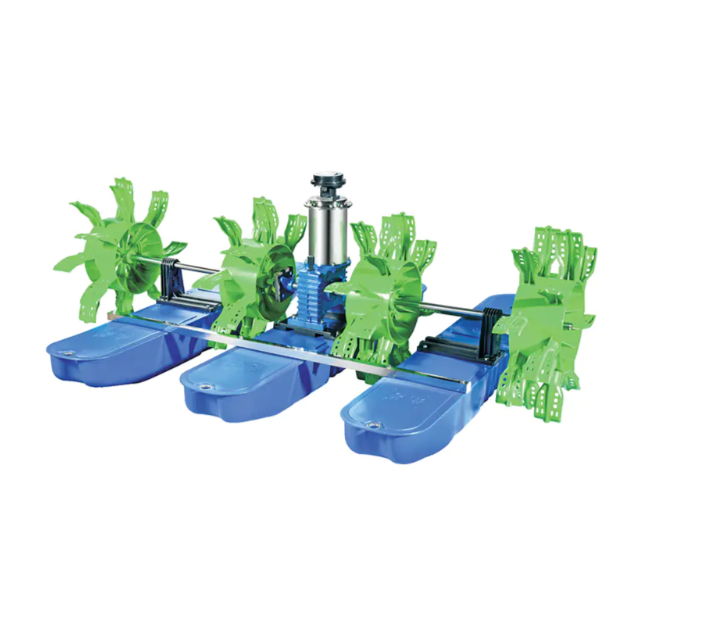
Two machines may look similar from a distance. But their pricing can be quite different. That difference usually comes from details that are not always visible on the surface.
Understanding these factors helps make sense of how the market behaves. It also explains why suppliers often give different quotes for what seems like the same type of equipment.
Why does material choice influence paddle wheel aerator price ?
Material selection plays a quiet but important role in pricing. It affects both production cost and long-term behavior of the equipment.
A paddle wheel aerator operates in water for long periods. This environment is not gentle. Moisture, movement, and exposure to changing conditions all affect materials over time.
Some materials are chosen for stability. Others are selected for balance between strength and cost. When more durable or corrosion-resistant materials are used, the overall price tends to rise.
It is not only about the raw material itself. Processing methods also matter. Certain materials require more careful shaping or treatment before they can be used in assembly.
This combination of material and processing shapes the final cost in a natural way.
How does motor selection affect market pricing?
The motor is one of the most important parts of a paddle wheel aerator. It determines how the system performs under continuous operation.
Different motors offer different levels of stability and resistance to changing load conditions. Some are designed for steady use over long periods. Others are built with simpler operation needs in mind.
When a manufacturer selects a higher-stability motor, production cost increases. This often reflects in the final price of the equipment.
The motor also affects how the system behaves in real aquaculture environments. Water resistance is not constant. It changes depending on movement, temperature, and surrounding conditions.
A more stable motor helps maintain consistent rotation, which is important for water circulation. This added reliability becomes part of the pricing structure.
Why do design and structure affect pricing differences?
Design is not only about appearance. It directly influences how the machine works.
In paddle wheel aerators, the structure includes wheel layout, frame balance, and overall positioning of moving parts. Even small design adjustments can affect performance.
A more refined structure often requires additional planning during production. Assembly steps may need more precision. This increases manufacturing effort.
Simple designs may reduce production time, but they may not always provide the same level of stability during long-term use.
Because of this balance, design complexity becomes a natural factor in pricing variation across the market.
How does production process impact final cost?
Manufacturing is not a single step. It is a sequence of controlled actions.
Each stage adds value and cost at the same time. Cutting, shaping, assembling, and checking all require time and attention.
When production involves more careful alignment or repeated checks, the cost increases slightly. This is not always visible to buyers, but it affects the final price structure.
Some production lines focus on speed. Others focus more on consistency. These different approaches lead to different pricing levels.
It is not about better or worse. It is about how the product is made and how much attention is given during each step.
What role does durability expectation play in pricing?
Durability is closely linked to how long a machine is expected to perform in real conditions.
A paddle wheel aerator is often used continuously. It is exposed to water and environmental changes for long periods. Because of this, durability expectations are part of the design process.
When a product is built with longer usability in mind, additional reinforcement may be included in certain parts. This can increase production cost.
Durability does not mean a product will never wear out. It means the system is designed to handle repeated use without sudden change in performance.
This expectation shapes how pricing is formed in the market.
How does order quantity influence unit price?
How many items a customer buys directly shifts how much each single piece ends up costing.
Big batch orders let factories run their production far more efficiently. Raw supplies get purchased in large lots, and assembly work settles into a consistent routine that cuts wasted working hours.
Things work differently for small purchases. Factories have to reset equipment and tweak processing parameters separately for every tiny run, adding extra prep work for every finished product.
These gaps in production efficiency naturally make per-item pricing shift up or down alongside order size.
Such price shifts stem from actual factory running costs instead of arbitrary marketing rules, matching the real expense patterns seen on production floors.
Does customization affect paddle wheel aerator price?
Customization adds another layer to pricing structure.
Some buyers require specific adjustments to match their operational environment. This may include changes in size, structure, or functional arrangement.
Customization requires additional planning before production begins. It may also involve adjustments during assembly.
These extra steps increase production time and coordination effort. As a result, pricing may shift accordingly.
Standardized models usually follow a more predictable production path. Custom versions move outside that pattern, which is why their pricing behaves differently.
How do quality control steps influence cost?
Quality control is often overlooked when discussing pricing, but it plays a steady role behind the scenes.
Each inspection stage ensures that the product behaves as expected before leaving the production line. This includes checking movement, structure, and overall consistency.
When more inspection steps are included, production time increases. However, this also reduces the chance of issues later in use.
Some manufacturers apply multiple checks at different stages rather than only at the end. This layered approach affects cost, even if it is not directly visible to buyers.
Quality control is not only a cost factor. It is also part of how reliability is maintained.
What market conditions influence price changes?
Multiple shifting market circumstances will lead to price fluctuations for identical equipment.
Raw material stock levels, outbound shipping fees and actual market demand all keep changing all year round, directly affecting final quotations.
If raw goods turn scarce or delivery costs spike, producers have to revise selling prices to cover rising factory outlays, and such cost swings are hard to forecast ahead of time.
Besides cost fluctuations, rivalry between different makers also impacts pricing decisions. Each factory sets its quotes based on its own processing method and target customer groups.
That's why consumers can see widely varied prices when comparing products belonging to the same classification.
A closer look at pricing factors
| Factor | Influence on Price |
|---|---|
| Material selection | Affects production stability and cost |
| Motor type | Impacts performance consistency |
| Design structure | Changes production complexity |
| Manufacturing process | Influences labor and time usage |
| Order quantity | Adjusts production efficiency |
| Custom requirements | Adds planning and adjustment effort |
| Quality control | Increases inspection and consistency effort |
Why does paddle wheel aerator pricing vary so widely?
Pricing variation is not random. It reflects the combination of decisions made during design and production.
Each factor adds a layer to the final cost. Some are visible, like size or structure. Others are less obvious, like internal inspection routines or material preparation methods.
When all these elements come together, they create a pricing range rather than a fixed number.
This is why two similar-looking machines may still have different market values.
The equipment itself is part of a larger system that includes production methods, usage expectations, and operational environments.