

 English
 中文简体
中文简体 عربى
عربىAsk any pond manager about their worst morning and you will probably hear some version of the same story: fish gasping near the surface, moving slower than usual, sometimes piling up in one corner of the pond for no obvious reason. Feed looks fine. Water looks clear. Nothing seems visibly wrong. Nine times out of ten, the issue traces back to oxygen, not disease, not feed quality, just plain old dissolved oxygen dropping lower than anyone noticed.
This is the exact problem a float type aerator, sometimes called a floating oxygenator, was built to deal with.
Why Oxygen Levels Drop Without Warning
Water simply cannot hold as much oxygen as air does. That gap gets worse at night, when algae and aquatic plants stop producing oxygen through photosynthesis and instead start consuming it through respiration, right alongside the fish. Add a hot afternoon, a pond stocked a little too densely, or a layer of decomposing organic matter sitting at the bottom, and oxygen can fall fast enough to cause real stress within a matter of hours.
Farmers who have dealt with a sudden die-off once tend not to forget it. That is usually when aeration stops being an afterthought and starts being part of the daily routine.
So What Exactly Is a Float Type Aerator
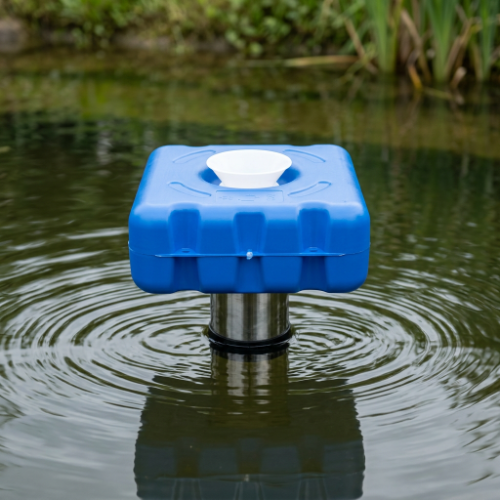
Strip away the branding and a float type aerator is basically a water pump that stays on the surface instead of sitting on the pond floor or bolting onto a fixed platform. Rather than pulling water from deep below, it draws from just under the surface, moves it around, and sends it back out to encourage mixing and gas exchange across the water body.
The floating part is not just there for convenience, either. Because the whole unit rests on the water itself, it rises and falls naturally with the pond, whether that is from rainfall, tidal movement in coastal setups, or seasonal changes in water level. Nobody has to climb out there and readjust anything every time conditions shift.
Why Floating Beats Fixed, In Most Cases
A few things stand out once you have used both types side by side:
- There is no platform or mounting structure to build before the pump can go to work
- Moving it to another pond, if needed, does not require major disassembly
- Water level changes do not throw off performance the way they might with a fixed unit
None of that sounds dramatic on paper, but for anyone running multiple ponds or dealing with tidal seawater, it adds up to a lot less hassle over a season.
How the Pump Actually Moves Water Around
Here is roughly what happens once the unit is running. Water gets drawn in near the surface rather than from the pond floor. It passes through the pump mechanism, gets mixed in the process, and gets pushed back out across the surface. That outward movement disturbs still patches of water, which is where a good chunk of the oxygen transfer actually happens.
An Intake That Does Not Stay Put
One detail people notice once they have watched this equipment in action: the intake point is not fixed at some set depth. It moves along with the float, staying close to the surface no matter whether the pond is shallow or fairly deep. That matters because surface water usually carries more dissolved oxygen than water near the bottom, especially in ponds where sediment tends to build up.
Movement Matters As Much As Bubbles
Aeration gets talked about like it is all about bubbles, but circulation plays just as big a role. Still water settles into layers, warmer oxygen-rich water on top, cooler oxygen-poor water underneath. Constant mixing keeps those layers from separating too much, which is part of why sudden overnight oxygen crashes become less likely once a pump like this is running.
Why Surface Water Gets Preferred Over Bottom Water
There is a reason this design focuses on the top layer instead of the pond floor. Bottom water tends to run cooler and carries more decomposing material, which drags oxygen levels down. Surface water stays in contact with the air, so it is generally warmer and holds more oxygen.
This shows up outside of aquaculture too. Some rice growers have noticed their crops respond well to slightly warmer irrigation water compared to cold water pulled from below. Results depend heavily on climate and soil, so it is not a guarantee across the board, but it is a benefit some farmers factor into their decision.
Float Type Aerators Compared to Bottom-Mounted Units
| What You Are Looking At | Float Type Aerator | Bottom-Mounted Aerator |
|---|---|---|
| Getting it set up | Drop it in, plug it in | Usually needs a fixed structure |
| Where it pulls water from | Near the surface | Near the bottom, closer to sediment |
| Handling water level changes | Adjusts on its own | May need manual repositioning |
| Risk from sediment or debris | Lower | Higher over time |
| Moving it elsewhere | Fairly straightforward | Usually stays put once installed |
Bottom aerators still have their place in certain deep-water situations. But for ponds, shallow lakes, and seawater aquaculture, the floating design tends to fit day-to-day operations more comfortably.
Where People Actually Use This Equipment
Fish and Shrimp Farms
Survival rates and growth consistency in aquaculture come down to oxygen availability more often than people expect. Floating units get used heavily during warmer months or in ponds stocked a bit more densely than usual. Seawater-specific versions are built with materials meant to hold up against salt exposure over time, since standard components tend to corrode faster in that environment.
Irrigation and Farmland Water Supply
Outside of fish farming, these pumps show up in irrigation setups too, particularly for paddy fields and reservoirs. Pulling warmer surface water instead of cold water from the bottom appeals to growers who want steadier water temperature reaching their crops.
General Pond and Lake Maintenance
Retention ponds, small lakes, and other water bodies prone to algae buildup or that stagnant smell also rely on this kind of aerator to keep water moving. Movement alone goes a long way toward reducing the conditions that let algae blooms take hold in the first place.
What Seawater Use Actually Requires
Not every floating pump on the market is built to handle saltwater. Seawater is corrosive, and parts not designed with that in mind wear down faster than most people expect. Units made for seawater use typically rely on corrosion-resistant materials for anything staying in constant contact with saltwater, along with shaft seals designed to hold up against sediment interference. None of that guarantees the equipment lasts forever, but it does mean fewer surprises across different seasons compared to using a freshwater-only pump in a saltwater setting.
A Few Things Worth Checking Before You Buy One
Before settling on any particular unit, it is worth working through a short list of questions:
- Is the water freshwater, brackish, or full seawater
- How large is the pond, tank, or reservoir being aerated
- Does the site deal with tidal shifts or heavy seasonal rainfall
- Will the pump need to move between different ponds down the line
Answering these honestly upfront tends to save a lot of back and forth later. Equipment built for calm freshwater ponds does not always hold up the same way in tidal seawater conditions without the right corrosion-resistant build.
Where This Leaves You
At its core, a float type aerator solves a fairly ordinary problem, keeping oxygen levels from dropping into dangerous territory in water that would otherwise settle into stagnant layers. Drawing from the surface, adjusting naturally as water levels shift, and keeping the water moving, that combination covers most of what makes this equipment useful across aquaculture, irrigation, and general pond upkeep.
Understanding how it works, and matching it to your actual water conditions rather than a generic description, makes the decision a lot easier when it comes time to choose equipment for your own setup.